


If your kids turn up their noses at vegetables, you’re not alone. Many kids won’t eat vegetables, which can lead to lots of frustration and worry. If you’re looking for information on how to get kids to eat vegetables, you’re in the right place. (Spoiler alert! You can’t make kids eat vegetables).
The good news? It’s totally normal for kids not to eat vegetables and it doesn’t mean they’ll never learn to eat (and even enjoy!) vegetables.

Why kids don’t like vegetables
Have you ever wondered why kids don’t like vegetables? Vegetables can be a bit unpredictable. Each time we eat vegetables they may taste a little different and their texture may be different.
In general, kids are cautious of new things, and vegetables can feel like something new each time they eat them. Also, diet culture tells us we shouldn’t add fat or salt to vegetables.
So, often, we are serving our children vegetables that don’t taste great! Remember, fat and salt enhances the flavor of foods and fat helps us absorb the fat soluble vitamins in vegetables.
Fruits Count, Too
First, take a deep breath. Does your child eat fruit? If so, they’re already getting many of the same nutrients found in vegetables. For example, orange fruits like peaches, mangoes, and cantaloupe have similar vitamins and minerals as orange vegetables like carrots and sweet potatoes.
Both fruits and vegetables provide fiber, which supports digestion and overall health. If your child refuses to eat vegetables and doesn’t eat much fruit either, these tips below apply to all produce and will support them in learning to eat more fruits and vegetables.
Still worried?
It can feel scary when your child won’t eat vegetables, but most kids eventually expand their palates. They all do it on their own timeline and our job as parents is to continue to expose them to foods in a supportive, non-pressured way.
In the meantime, if you’re feeling uneasy, you can give your child a multivitamin to help ease your mind while your child continues learning to enjoy vegetables.
Tips to Help Kids Learn to Eat Vegetables
- Don’t force, just offer. Pressuring kids to eat vegetables (and any foods) often backfires. Simply putting vegetables on the table and watching other family members eat vegetables is exposure. Children learn to eat the foods they are exposed to, over time. Here are some ideas for vegetable sides and an easy plant-based protein like crispy baked tofu.
- Model eating vegetables yourself. Kids learn by watching, and seeing you enjoy vegetables makes a difference.
- Keep offering, even if they refuse. It can take many, many exposures before a child decides to taste or accept a food. Offering vegetables in different ways offers more opportunities for a child to eat vegetables when they are ready. For example, your child might not eat spinach, but they may feel comfortable trying spinach lasagna. Or they might not like zucchini, but they’ll try pasta with zucchini and corn.
- Make them taste good. Like I said above, don’t be afraid to add flavor! Try dips, dressings, butter, herbs, cheese sauce, or breading. Guacamole, hummus, ketchup, tzatziki and ranch dressing can help kids eat vegetables because they taste better dipped in something they like. Here are some more tips for offering vegetables to your kids.
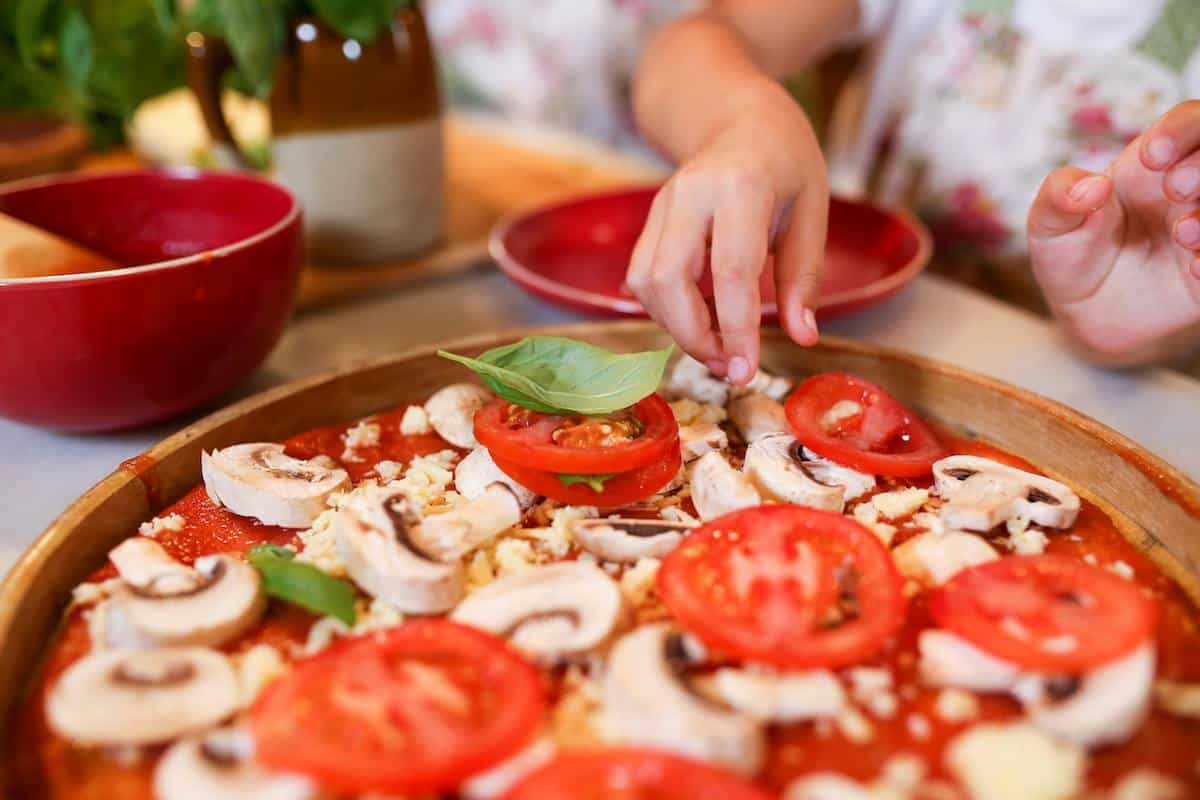
- Pair veggies with familiar foods. Add vegetables as pizza toppings, mix into scrambled eggs or quiche, or stir into pasta, such as mac and cheese are supportive ways that may help kids eat vegetables.
- Cook them in familiar ways. If your child likes fries, try baked sweet potato fries. If they like muffins, bake zucchini bread, carrot muffins, pumpkin bread or blueberry muffins.
- Have kids join you in the kitchen. If your child enjoys helping in the kitchen, involve them in washing, chopping, or even putting vegetables away when you get home from the grocery store. Research shows that involving kids in cooking can help them learn to like those foods, even vegetables.

Keep the Long View
The most important thing? Keep offering kids vegetables in different ways and without pressure. Kids can’t learn to eat foods they don’t see and experience. Include vegetables in your family meals in ways that feel natural to your household. Over time, with gentle exposure and no pressure, children are more likely to grow into adventurous eaters who enjoy the foods you enjoy.
Are you looking for more support in feeding your family?
Sign up for our weekly newsletter that offers tips, recipes, and overall support for you!

We’re Elizabeth & Anna!
It’s great to have you here. We’re registered dietitians and we share tips to support you in raising kids with a healthy relationship with food.






Thank you for the reassurance that we can keep offering veg (and fruit) in different ways and remove the pressure!
You’re welcome! Parents are under so much pressure to try to “get” their kids to eat more fruits and veggies. But pressure often leads to them eating even less of them.